
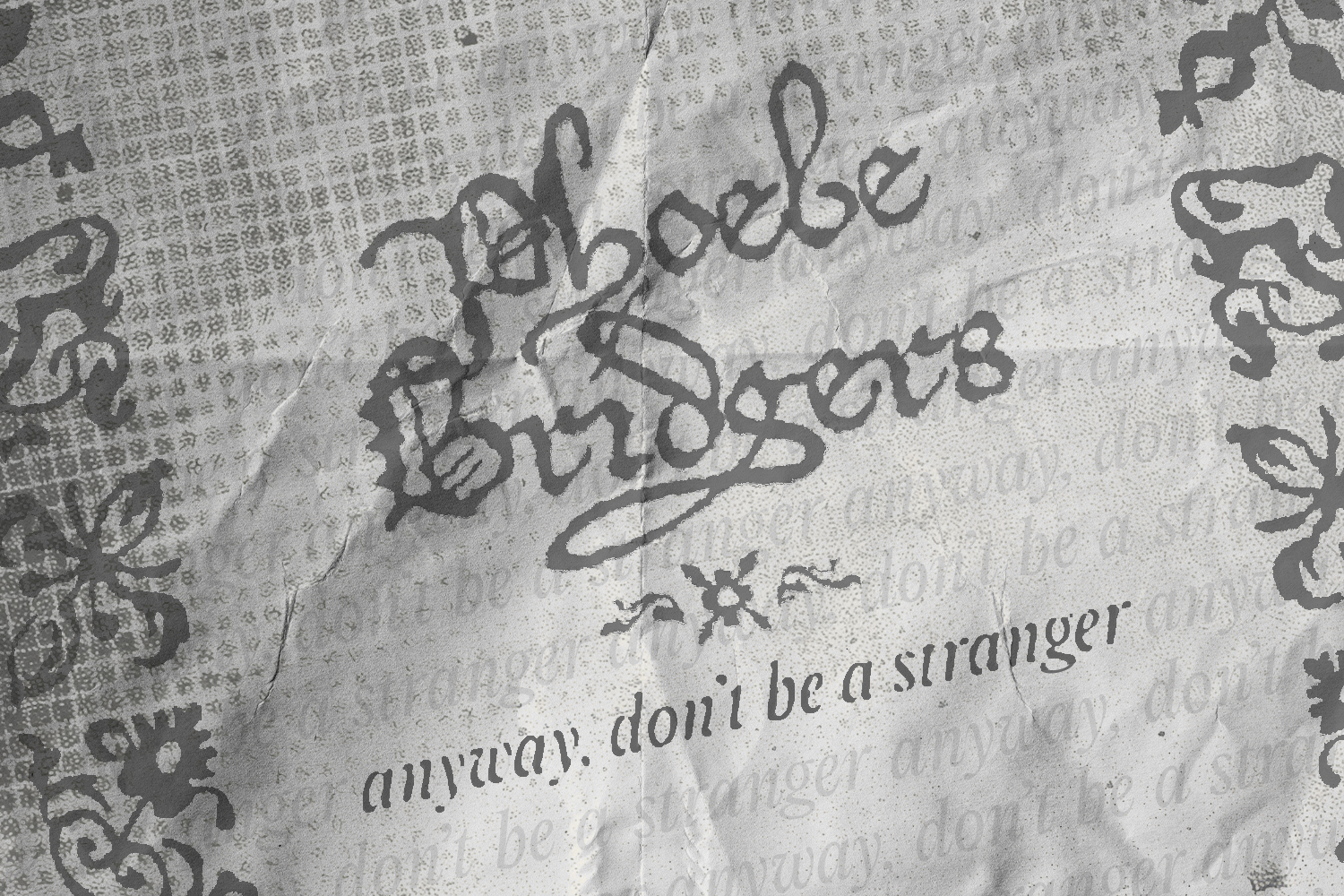

It’s about 9:08am on Monday, May 18th. I’m sitting in my graphic design class, and I get a text from my sister. She’s losing her mind. The day before, my sister and I had talked about these pop-up shows Phoebe Bridgers is doing and speculated where she might go, hoping we’d get to see her back in Ohio. She sends me a screenshot of a group chat her friend is in with a poster saying Phoebe Bridgers is doing a pop-up show in Savannah, GA.
Pop up shows have been seeing an increase in popularity. These events, though often harder to come by than a regular show, are great opportunities for artists to form deeper connections with their fan bases and to give an even chance for all of their listeners to watch them perform. Some of the artists that have recently done these events are Phoebe Bridgers, Billie Eilish, Ed Sheeran, and Kendrick Lamar. All of these artists have huge fan bases but choose to do more intimate events in small venues – which says something. These artists don’t necessarily need the intimacy, but they are actively choosing it.
These small venues make the space welcoming, more personal, and inviting for the viewer. You’re within at least 50 feet of the artist and can see them in full detail in front of you. There are no large screens mediating the experience, no squinting to barely make out the face you paid money to see. Just them and you. When these artists choose to perform at large stadium venues, the concert can feel more commercial. You lose the connection between artist and audience – which is crucial in creating a positive experience for fans. To me, it feels more like I’m watching a movie when I’m at a stadium concert with 50,000 people. Don’t get me wrong, those shows are also amazing in a completely different way. But the smaller, more relaxed vibe of a small venue makes for a more comfortable watch/listen. Especially when the artist has everyone sit crisscrossed on the floor, it strips away the barriers between performer and crowd, making it feel nostalgic and safer for the audience.
Along with these pop up events and smaller venues, we’ve begun to see more concerts, big and small, going completely offline. Some pop up shows don’t do any digital promotion, a technique that rewards those who are actually paying attention and tapped into the community. You have to be lucky enough to find the posters and get in line, which is what happened to me with the Phoebe Bridgers concert. Also, more of these shows are locking up devices and forcing their attendees to be present and in the moment. This is something I am so happy to see becoming more popular at events like this one. Now, I love to see the concert videos posted on TikTok and Instagram as much as the next person, but it pains me to see artists putting on crazy shows only for the entire crowd to be a sea of cellphones and cameras. It almost makes you wonder if anyone is truly paying attention to the time and effort of these artists, or if people are just there to post about it after.
Artists like Bruno Mars and Phoebe Bridgers are locking fans devices inside of Yondr pouches to force a more intimate moment. Other artists like Beyonce, Billie Eilish, Bjork, and Ethel Cain have talked more about concert etiquette and having genuine human interactions, instead of having your face buried in a device. It’s a quiet pushback against the way social media has turned live music into content. Truly, having more concerts without cellphones has been a breath of fresh air. It makes me more excited for the event when I don’t know what to expect. Going in blind, excited, and ready for the experience of the show with my friends, we get our phones locked in pouches to see Phoebe.
As soon as your devices are locked in the bag I immediately forget about them. I spent the entire time waiting for the show, talking with people, making new friends, and finding out I sat right in front of someone who lives an hour from my home town. That kind of thing doesn’t happen when everyone’s staring down at their screens, captured in the blue light. Not having my cellphone put me into a new headspace I wish more people could experience. For me, I felt a weight off my shoulders. I realized that I can’t get to my phone so I wouldn’t need to text anyone back or stay updated on my socials. Or, for that matter, do literally anything online. Instead, I realized that I should meet the people around me who obviously share a common interest. It sounds like a simple concept, but with societies obsession with constant technology, it felt liberating.
When the show first started, I was entirely focused on the music and my surroundings, the people around me. The entire space filled with emotion and her beautiful music. I won’t talk too much about the actual concert out of respect for Phoebe and her experiment with the YONDR pouchest, but throughout the entire show, I shared emotions with everyone around me. We sang, cried, laughed, and shared that moment together. I wasn’t scared of being recorded for singing or crying. I was truly immersed in the space. That kind of freedom is rarer to come by these days.
Being in that environment, it made me reconsider why artists are choosing to have small shows. I think part of that decision is making concerts more affordable and accessible for everyone. This concert was only $50, and comparing that to stadium tours, it’s miles of difference. When a ticket costs $50 instead of $300, the room looks more like the actual fanbase and not just the people who can afford to buy a ticket. Having more affordable venues makes the concerts available for anyone who lives in the area, giving a wider spectrum of fans the opportunity to attend in-person events and avoid exclusivity. Another aspect of location I want to touch on is concerts in the south. Typically, the south gets overlooked when artists go on tour in favor of cities with larger audiences and venues to maximize profits. This is due to tour routing and the long drive times between major cities/stadiums. However, there are so many smaller venues in many cities across the country. Touring at multiple small locations in the same state makes the shows more accessible and affordable to everyone, and doesn’t put a “ban” on southern residents. We’re here, we’re listening, and we’ll show up.
Concerts going offline makes for an unforgettable experience and makes everyone in attendance more engaged. It creates a safe feeling, not worrying about getting “clipped” by someone recording next to you. It gives the night a sense of permanence, ironically. The only place the memories live are with the people who were actually there. I hope more artists and venues opt to use these tactics and tell their audience “Anyway, don’t be a stranger.”
Words and Graphics by Connor Crankshaw (@connor.crankshaw & @ca.grds)