
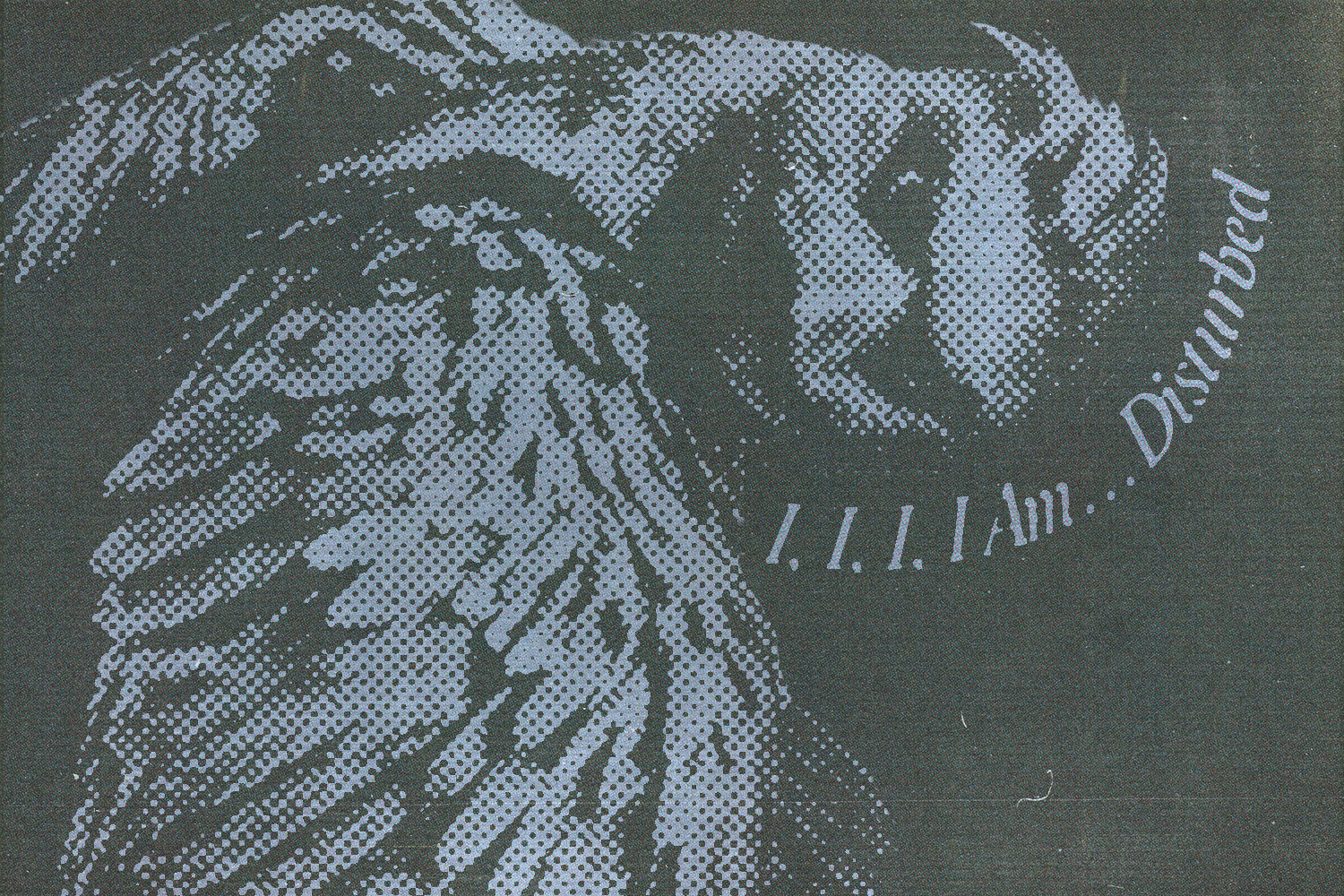

Prada’s Spring/Summer season has shown us the use of controversial generative technology, aiding Prada’s marketing team in creating one of the weirdest, and most unnecessary, campaigns I’ve seen in luxury fashion.
Jordan Wolfson, the artist behind the visuals for this campaign, is known for mixing relevant technologies into his work to create unsettling and provocative art. Typically his work gets mixed feelings and has a stark visual style, continuously attempting to evoke some sort of intense emotion in the viewer. His “work” for Prada is no different. In their latest campaign, we see familiar faces and looks from their Spring/Summer 2026 collection featuring Hunter Schafer, Nicholas Hoult, Damson Idris, and Liu Wen – including a few others. The same casting was seen in the “Image of an Image” campaign. This campaign, in my opinion, was very unique and something that I’ve never seen before, using still images and a swiping motion to transition into moving pictures – an “image of an image”. This campaign showed creativity and innovation, using regular images and turning them into video format. But, in their second act, they completely lost the plot.
Introducing…I, I, I, I Am…PRADA. This campaign features two gigantic anthropomorphic creatures, one feathered and one with scales, acting around the models wearing looks from SS26. These larger-than-life figures were created to make imagination tangible – but what are we really imagining? These creatures were made with an AI software that only requires a prompt to generate a starkly disturbing visual, drawing inspiration from an image-saturated society and online culture. While I think that this idea was powerful and has potential to be done very well, making the entire story of your campaign revolve around image-saturation by using AI was incredibly hypocritical, especially since AI is being force-fed to consumers daily. The situation is almost a double-edged sword: “Yes, I’m making a commentary, but to do so I’m using the exact thing I’m commenting on.” This becomes a very nuanced conversation when it comes to luxury retail, as there are companies that can afford to pay artists but are choosing the cheaper options to save money.
The campaign, however, was on the verge of hitting the mark. If Prada chose to invest in an actual 3D modeling/sculpting artist instead of using an AI shortcut, the brand could avoid backlash while investing in the arts and creating one-of-a-kind content. I truly enjoyed the looks that were featured in the ads, but I cannot put anything past the AI – a sentiment shared with many luxury consumers today. Large scale luxury brands that can afford to pay artists to create a higher caliber of work are part of the AI epidemic, leaving local artists high and dry. These companies’ greedy tactics are actively contributing to the environmental, and cognitive, decline that AI is forcing us through.
Right now AI is continuing to grow, and with this brings continual devastating effects on the environment. Generating one image can use up to 50 liters of water for every single prompt, water that then cannot be recycled. That is for a single image, not accounting for large format video – which one can only assume the impact that will have. An article by Better Planet Education states that “the UK government has estimated that by 2027, global AI use will require up to 6.6 billion cubic meters of water per year” equating to 1.7 trillion gallons. The average family uses about 400 gallons per day, or 146,000 gallons a year. 1.7 trillion gallons of water is enough to support 11.6 million families per year. Along with the environment, AI is killing our cognitive thinking skills. We are constantly being fed hundreds of AI posts every day, from stupid animal videos to Deepfakes that our grandparents think are real. There is also the current conversation around the art industry and how AI is soon going to take over a good portion of professional fields. This will become a real possibility if we don’t resist and actively strengthen our most powerful tool as human beings, our creativity. Without innovation and free thinking, it’s only a matter of time before AI advances even further. But, if we continue to create with imaginative freedom, art will always have a place in this world.
Prada following in step with AI usage in ad campaigns, in my opinion, is a poor signifier of the current state of the marketing industry. I think AI should stay out of the final product in any creative field, especially in a professional setting. This really makes me wonder What is coming next in the fashion marketing space? What choices will brands continue to make to capture an audience? Will they choose ethics over revenue, or vice versa? I don’t know where we are heading, but if this continues I do not see a very bright future – not only for the creative industry and our most creative minds, but for our planet.
Words and Graphics by Connor Crankshaw (@connor.crankshaw and @ca.grds)