

In our era of endless digital appetite, there are few remaining dependably excellent human indulgences: drunk cigarettes, post-recession synth-pop, and Schiaparelli opening couture week. It is little surprise that the house’s tenured slot as the foremost show of the week has become somewhat of a prophetic coin flip in determining an overarching attitude for the shows to come. It’s also unsurprising that Roseberry rarely calls the coin wrong.
“The Agony and The Ecstasy” was the title for Roseberry’s 14th couture collection for the house and likely references the 1965 Irving Stone novel of the same name. The novel profiles the tribulations of Michelangelo throughout the painting of the Sistine Chapel. Roseberry said in show notes that the collection was largely inspired by a visit he paid to the Chapel. Michelangelo’s work presented a simultaneously vicious and sanguine portrayal of the human condition. He relished in the divine rather than his dismay for the mundane. Michelangelo and Roseberry both remind us that art beckons for a world of fantasy. Couture exists within a dream.
As such, Roseberry presents the regalia of a kingdom burdened by mortality: animalia appeared in various presentations across the collection. Feathers fanned out to create royal collars, and wings began to bloom along the spine. Eventually, the fauna enveloped the garments entirely. A pufferfish with spines extended at the shoulders, an avian sfumato jacket with beaks protruding, ebbing from the form as if it itches for a return to flight. A similar jacket has a wing sweeping up from the collar, partially concealing the face of the wearer. Where does the animal end and the garment begin?


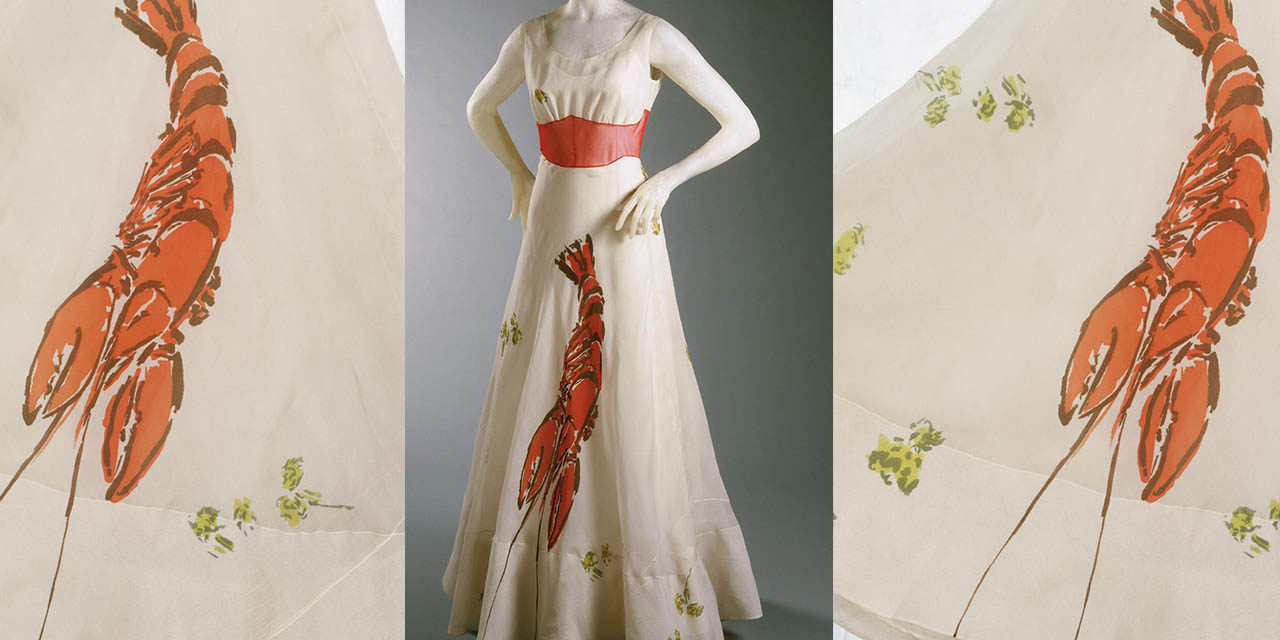
Roseberry is no stranger to dressing the celestial opera—familiar molded bustiers and crystalline fringes danced in tandem with peacock-embroidered jupons and onyx crocodiles strewn across tulle clouds. These fantastic beasts are not unfamiliar territory for the house (see Elsa Schiaparelli’s 1937 lobster dress), but his ability to transmute these “creatures” (as he refers to them) into adornment and animate them as he pleases is a rare feat of a couturier: he has created a vehicle for the extraterrestrial. Perhaps Roseberry’s creatures should be perceived as Pygmalion-ed harbingers, bearing a flag of hope for a future of fantasy.


Many conversations around fashion have become direly cyclical: creative directors, financial viability, sustainability, microtrends, and perpetual dissonance for the future. There is a narrow gap of unencumbered expression that Roseberry fulfills at Schiaparelli. For most, couture will only ever be something to admire—jewels in a case, paintings behind a line that cannot be crossed. But is that to say it shouldn’t offer the same solace as any other medium? Schiaparelli unfailingly blooms and breathes with the installation of a human spirit and exists without question of its other merits. It is a conjuring of pure awe. After all, what are ecstasy and agony if not simply a spectrum of intensity?
Words by Coulter Clifford
Graphics by Rose Davis