
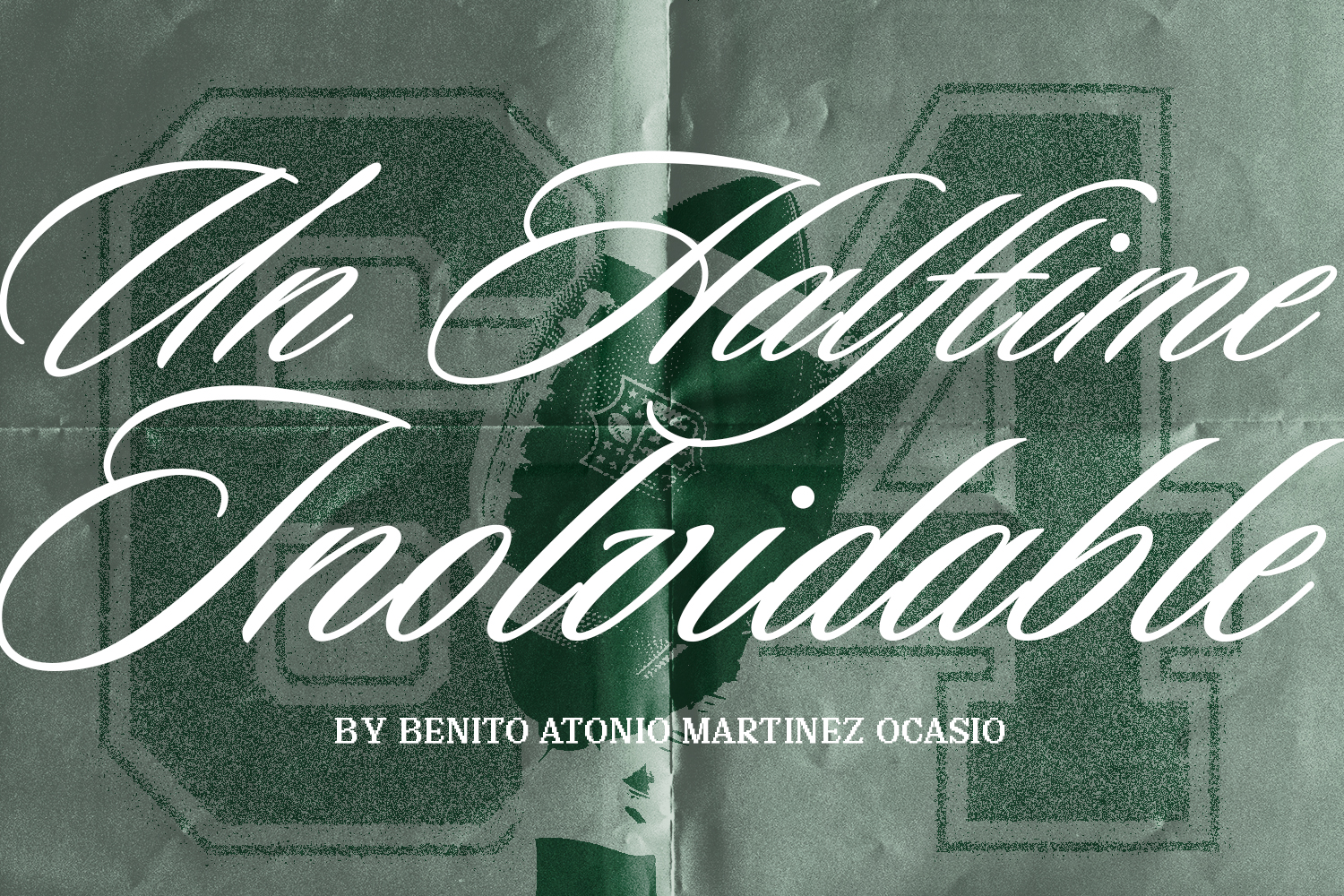

Nonstop dancing, a real wedding, and a live orchestra—that’s a Benito Antonio Martínez Ocasio show. Benito, better known worldwide as Bad Bunny, was the Super Bowl LX halftime performer. The music, the set, the production, and the costumes were all part of a singular, astonishing performance.
He opened with “Tití Me Pregunto“, one of his biggest hits, while moving through mazes of fields scattered with vendors. His setlist balanced all of his eras. He gave us perreo with songs from “YHLQMDLG”, dembow with songs from “Un Verano Sin Ti”, trap with tracks from “Nadie Sabe Lo Que Va a Pasar Mañana”, and songs from his new album, “DeBÍ TiRAR MáS FOToS”. Bad Bunny filled the stadium with reguetón, house, plena, bomba, jíbaro, and salsa—traditional Puerto Rican and Latin rhythms. The setlist dynamic and Bad Bunny had not one, but two special guests. Lady Gaga sang a salsa-inspired rendition of her song “Die with a Smile”, literally symbolizing cultural unity. Whilst Ricky Martin sang Bad Bunny’s “LO QUE LE PASO A HAWAii”.
Benito moved through swaying fields to “La Casita,” a traditional Puerto Rican house that has become a trademark of his DeBi TiRAR MáS FOToS tour, where he sang “Yo Perreo Sola,” “Safaera,” and “VOY A LLeVARTE PA PR.” He ended this reggaeton section with a bang… literally; he fell through the roof. As he moved to the main stage, the melody of “Monaco” played in the background, followed by a real-life wedding. Two people bound by love and blind to culture, unified. This became the gateway to Lady Gaga’s star appearance, where she sang “Die with a Smile” and later danced with Benito to “BAILE INoLVIDABLE”. A wedding party where people were dancing and singing, enjoying life without fear. Through the mundane, humanizing us all. Afterall, dancing and living without fear is the most powerful resistance against dehumanizing forces.
Then “NuevaYoL” came on, arguably the most touching segment of the performance… Bad Bunny gave his kid self his newly won Grammy. A true testimony of what believing in yourself can do. Benito, as a child, had dreams; not many believed in him, but his faith in his talent never wavered. And the cherry on top, Ricky Martin singing “LO QUE LE PASO A HAWAii.” The last section of the show began with “El Apagón,” the stage taking the shape of electrical towers, sparks flying everywhere, and people hanging from cables. He closed the night by calling forth all the American countries from Canada to Chile; flags were brought out, and people were singing and dancing to his newest hit, “DtMF.”
In terms of fashion, Bad Bunny nailed his look. Unusually, he wore custom Zara, not a designer brand. His look included a collared shirt and tie, a sport-inspired jersey, chinos, and sneakers—everything in shades of cream. He wore his BadBo 1.0, a collaboration with Adidas that dropped the Monday after his performance, and the details in the jacket featured his family name, Ocasio, and the number 64, his uncle Cutito’s birth year.
But why Zara? Why not a high-fashion or Latin designer brand? Benito grew up in the 90s just as Inditex was introduced to Mexico and Argentina. The brand’s mass production resulted in its distribution through the entirety of Latin America, and even though expensive, the clothes trickled down into the masses through gift-giving, donations, and secondhand stores. Inditex in Latin America symbolizes the democratization of fashion; it’s the narrative thread that unified and connected the region. For his second and final look, Bad Bunny wore a zoot suit, during its time a garment that symbolized rebellion, and what is Benito if not rebellious?
Were these looks amazing? Yes. Are Inditex’s policiesies atrociousous? Also yes. But wearing Zara added to the narrative, shedding light on the fact that sometimes this type of fast-paced mass production is the only one accessible to Latin Americans. However, Bad Bunny wasn’t the only one with amazing outfits. Lady Gaga wore a beautiful light blue, organza pleated dress by Luar. Inspired by her style, Latin American culture, and the Puerto Rican flag. Overall, the storytelling through the use of fashion was impeccable. Everything was thought out and detail-oriented.
The whole production was incredible, the looks gave what they needed to give, and the setlist was to die for. This halftime was historic, not only for the entertainment business; it was an overall cultural phenomenon. Whether you loved or hated this performance, you won’t forget it. The message was never overpowered by the spectacle: “Love is the only thing more powerful than hate.” That was Benito’s closing statement: we are a single unit, we are all humans, and we all deserve peace.
Words by Ariana Sancho
Graphics by Ariana Sancho