
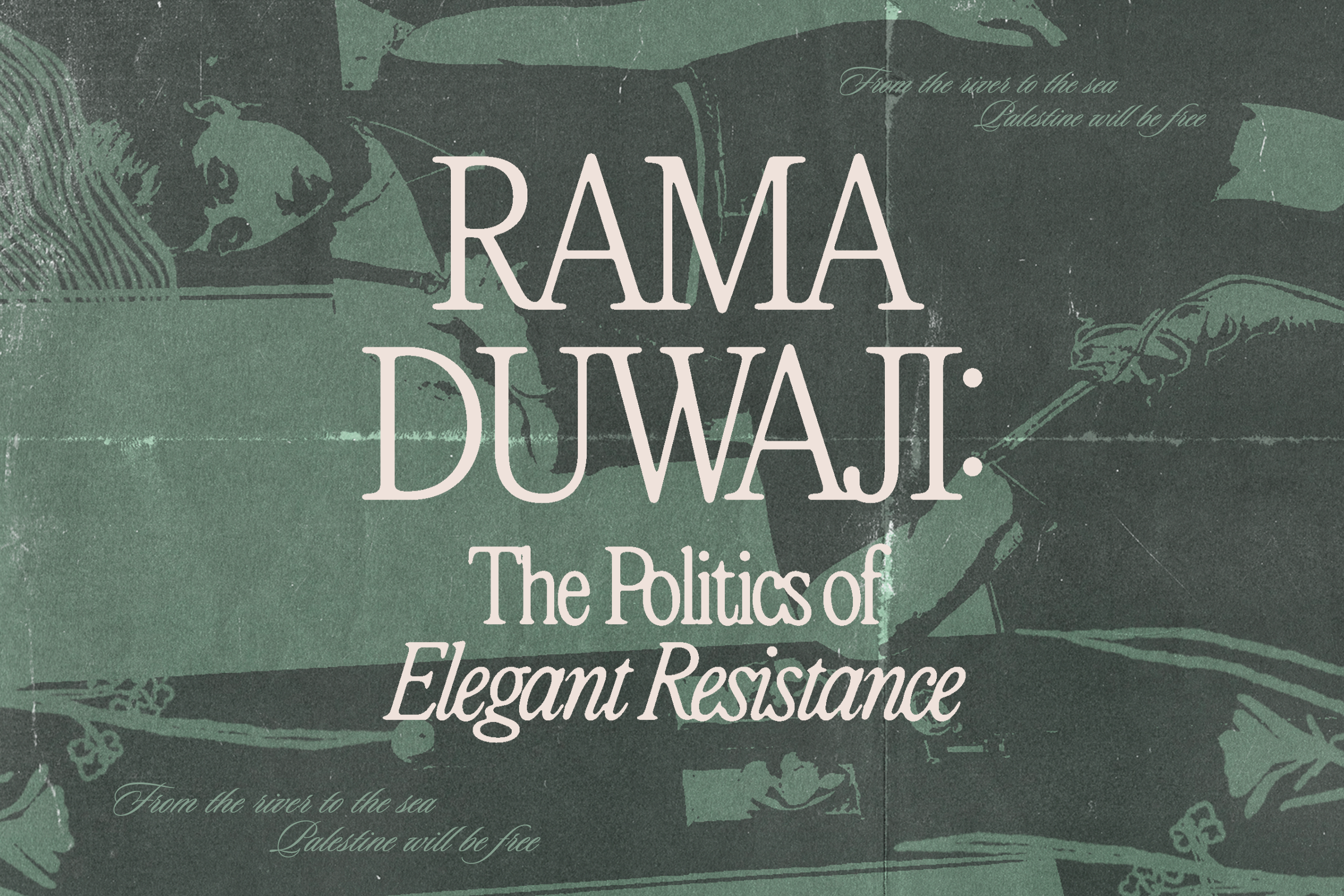

It’s been only two months since Rama Duwaji became the First Lady of New York City, and she has already captured the headlines from The New York Times to Vogue with her powerful fashion choices.
There’s a long, unspoken job description that comes with being a First Lady in America, whether it’s the White House or a city hall with marble floors and a hundred-year-old press corps. Smile. Wave. Support. And, eventually, accept that the public will read your appearance like a billboard. First Ladies have always been styled as symbols, but many of them have flipped the script and use fashion as a language. Jackie Kennedy turned diplomacy into a silhouette, Lady Bird Johnson used “American-made” as a cultural stance, and Michelle Obama took the most predictable question in the world and made it useful.
In “Becoming”, Michelle Obama explains how quickly “what are you wearing” becomes the headline, and sometimes the only headline. She recalls stepping offstage after an emotional visit with schoolgirls in London, only to hear that the first question a reporter asked her staff was, “Who made her dress?” Instead of letting that reduce her, she reframed it. If people were going to look, then the look had to carry something. A designer could be a platform. A dress could be a headline that points somewhere more than vanity. That’s the blueprint Rama Duwaji is following, and she’s doing it in a place that prides itself on reading between the lines, New York City.
When Zohran Mamdani was sworn in as the 112th Mayor of New York City on January 1, 2026, Rama Duwaji entered the spotlight as Gracie Mansion’s newest First Lady. It’s not an elected role, and that’s the point. The power here is cultural, and New York runs on culture. The city’s last high-profile “First Lady” presence was during Bill de Blasio’s administration, when Chirlane McCray took on a public presence and shaped how New Yorkers understood the position. Rama’s influence is different, less bureaucratic, more visual, but no less intentional.
Duwaji is an artist first, a Brooklyn-based Syrian-American illustrator and animator whose work has touched major outlets and clients, and whose social media has consistently engaged with political realities, including the humanitarian crisis in Gaza. So when her style choices started circulating like breaking news, it wasn’t a new concept for her; she just gained a larger platform.
She has always been someone who understands image-making as a form of power. Her fashion reads like a refusal to perform the traditional First Lady costume. No default sheath dress, no “safe” optics, no beige attempt at being palatable. Instead, she wears pieces that feel lived-in, crafted, and specific, which is exactly what New York respects. For Mamdani’s January 1 swearing-in, she wore a funnel-neck coat by Palestinian-Lebanese designer Cynthia Merhej’s Renaissance Renaissance, then switched to a rented vintage Balenciaga coat, vintage earrings, and borrowed pieces from indie brands for the public ceremony. That detail matters. Renting and borrowing is a quiet rejection of performative excess, and it signals something rarer than luxury right now, restraint.
But her most important fashion statements are the moments where clothing becomes solidarity. On election night, Duwaji appeared beside Mamdani in a black, laser-etched denim top by Zeid Hijazi, a Palestinian-Jordanian designer whose work draws on heritage and futurism at once. That choice landed because it wasn’t vague. It wasn’t “inspired by.” It was direct support, a living endorsement worn in front of cameras that would shine on millions of screens. She also paired that top with the work of independent New York designers, which is a very specific mix, local and diasporic in the same breath. A later appearance in an embroidered top by the same Palestinian designer, a pattern of visibility demonstrated a deep commitment.
But she doesn’t keep that commitment confined to aesthetics. Duwaji’s artwork has addressed Palestinian suffering amid the ongoing crisis, and she has spoken about using her voice to speak on “the US and Palestine and Syria.” She’s also been tied to fundraising efforts that direct proceeds to Medical Aid for Palestinians, with promotions circulating a poster designed by Duwaji for that purpose. Fashion gets people to look. Art prompts them to take action.
Duwaji’s wardrobe doesn’t just say she has taste, it says she has values. It backs that up by uplifting Palestinian designers, supporting independent New York talent, and choosing methods like renting that contrast the usual political-wife spectacle. To understand why that contrast matters, you only have to look in front of you, at the current example of the modern First Lady fashion as not just a message, but a slap in the face to the people.
In June 2018, Melania Trump wore a $39 Zara jacket emblazoned with “I really don’t care, do u?” while traveling to Texas to visit a shelter amid the separation of migrant children from their parents at the US-Mexico border. Whether it was “just a jacket” or not, the public read it the way fashion is always read in positions of power, as intent. Trump’s jacket communicated distance and detachment at the exact moment the country was begging for human empathy. Duwaji’s clothing, in contrast, is designed to close the distance. It’s relational. It points outward. Fashion has never been empty, not when women wear it for the people. It’s a tool, and like any tool, it can be used to build or to barricade. Rama Duwaji is building. There’s something elegantly radical about watching a First Lady refuse to flatten herself into a digestible archetype. New York doesn’t need another polished mannequin at the podium. It needs a visual culture that matches the city’s actual people. Immigrant, intersectional, political, stylish, and intentional. Duwaji’s influence feels comfortably normal but still aspirational. Not luxury as distance, but fashion as alignment. Michelle Obama didn’t invent First Lady strategy dressing, but she called it out unapologetically with the sentiment: “They will ask about your clothes anyway.” Rama Duwaji seems to understand the next step just as clearly. If the gaze is unavoidable, then the message has to be worth looking at.
Words by Mishi Ali
Graphics by Aubrey Lauer