

When you open The Washington Post, the subline under their title reads “Democracy Dies in Darkness.” A powerful statement. If you spend a couple more minutes on the website and happen to want to read something, you’ll discover something much darker––a paywall.
There’s no place darker than behind a paywall.
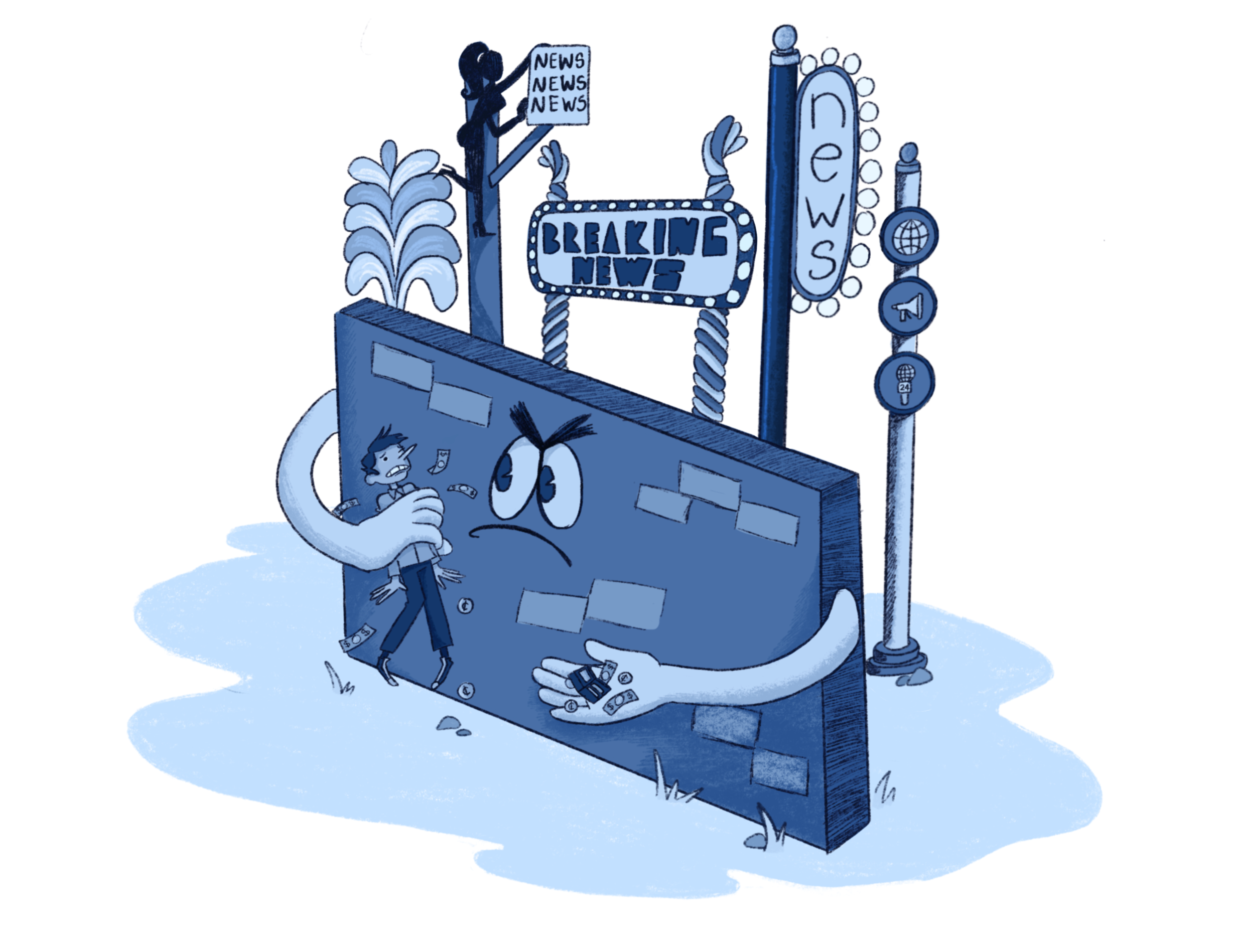
Paywalls are a recent implementation. A couple decades ago, all you needed to read the newspaper was a dedicated paper boy, 0.55 cents, or a swift hand to steal one at a coffee shop. But after the slow collapse of physical news in the digital age, you now need a subscription to any number of publications to receive daily news, and it’s not even coming to your door to read during breakfast anymore.
Although I believe all news should be free, I’m not talking about Vogue Runway, The Cut, or any other magazine when speaking about “news.” When speaking about fashion, it’s rare that you can access breaking fashion news without purchasing a subscription. Publications like the aforementioned or anything in the Condé Nast conglomerate all require a monthly or yearly plan to access any number of their articles. Although smaller magazines, a la I-D, Interview, V Magazine, etc., are free to view, they are more of an editorial powerhouse and less of an urgent writers’ room. As a proud print media defender, I hope you’re buying the magazines you resonate with, but a magazine has always been a sort of “luxury” or, shall I say, “extra” item, so a digital subscription sadly makes sense in this scenario.
The real problem arises when the populace can’t access reliable news. Behind classism lies the largest problem with paywalls. Misinformation. If you need to pay for reputable news, people (and by people I mean 83% of Americans) will get their news elsewhere. And by elsewhere, I mean TikTok, Facebook, or a number of free rhetoric-forward sites.
There are a number of systems to blame. The news companies themselves, our current government…with people in power pushing “fake news” narratives, and also readers running with inaccurate information. I often find myself discussing “articles I have read” when in reality I’m referencing a TikTok or an Instagram carousel. But can I really be to blame when a single subscription costs upwards of $15 a month??
This framing of social media information as news is a detriment. Nothing can exist on social media without some form of monetization. People aren’t sharing news and stories out of the goodness of their hearts; they’re being paid for clicks, views, and comments. The idea that you will share it fills their pockets.
Online literacy is an ongoing problem in America, and although it’s easy to blame readers and users for this, we need to look up at the corporations that have made it impossible to consume reliable information. Democracy does not have to die in darkness, but should it fall on the populace to pay the light bill?
Words and Graphic by Evan Skovronsky
Illustration by Carley Fernandez